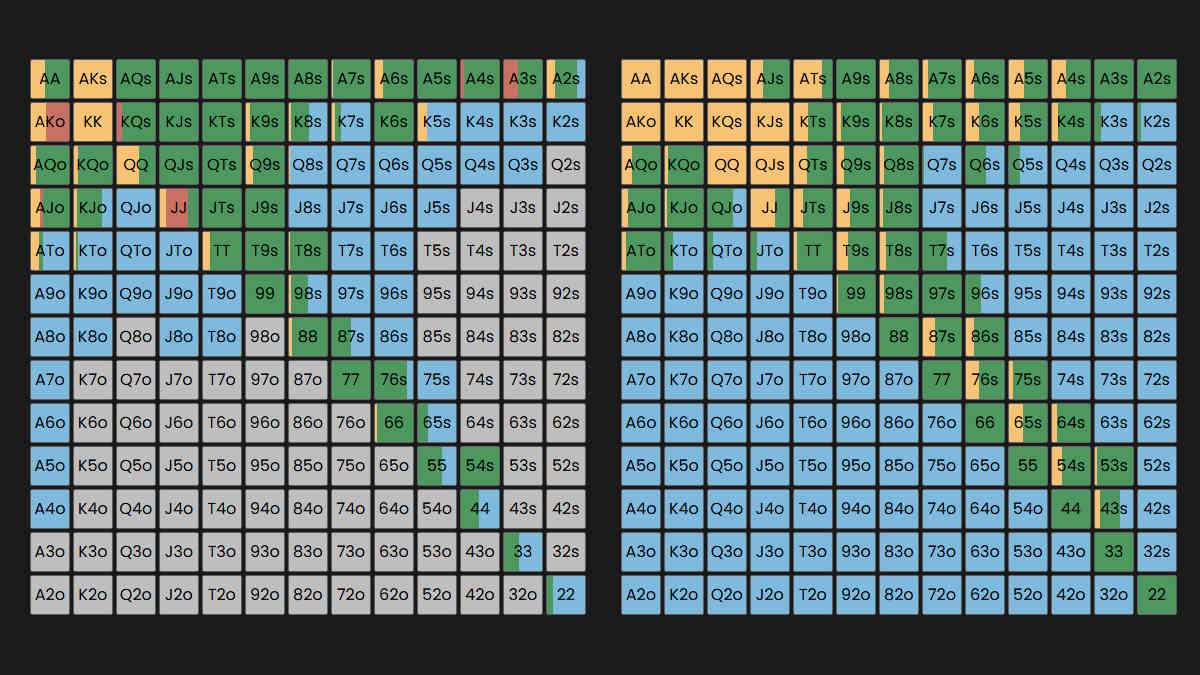
Poker has evolved far beyond the simple understanding of hand rankings and bluffing. For seasoned players, excelling at the game requires a deep comprehension of advanced strategies, psychology, and game theory. This article delves into sophisticated poker tactics, decision-making frameworks, and strategic insights that separate casual players from elite professionals.
Understanding Game Theory in Poker
Poker is fundamentally a game of incomplete information. Unlike chess, where all pieces are visible, poker players must make decisions based on limited data and probabilities. Game Theory Optimal (GTO) is a strategy that focuses on making decisions that cannot be exploited by opponents.
Key Aspects of GTO Strategy
-
Balanced Ranges: A balanced range ensures that you mix your plays (betting, folding, or raising) in such a way that opponents cannot predict your actions.
-
Equilibrium Play: GTO aims for equilibrium, where your strategy minimizes losses regardless of how skilled your opponents are.
-
Adjusting Exploitatively: While GTO provides a foundation, advanced players often adjust exploitatively against weaker opponents to maximize profits.
By mastering GTO, players gain a framework to make consistent, mathematically sound decisions at the table, enhancing long-term profitability.
The Role of Psychological Warfare
Advanced poker is as much about the mind as it is about cards. Elite players leverage psychological insight to manipulate opponents and gain an edge.
Reading Opponents
-
Betting Patterns: Observing when an opponent bets aggressively or passively can reveal the strength of their hand.
-
Timing Tells: The speed of decisions can indicate confidence or hesitation.
-
Behavioral Analysis: Facial expressions, body language, and verbal cues often provide subtle but actionable information.
The Art of Bluffing
-
Selective Aggression: Bluffing indiscriminately can be costly. Advanced players choose the right moment based on board texture, opponent tendencies, and stack sizes.
-
Semi-Bluffs: Betting with a drawing hand that could improve on later streets allows a dual opportunity: fold opponents or complete your hand.
Bluffing at an advanced level is a calculated psychological maneuver, designed to influence opponents’ decisions while managing risk.
Advanced Positional Awareness
Position is a crucial concept that separates amateurs from professionals. Being “in position” means acting after your opponents, allowing for better decision-making.
Positional Tactics
-
Late Position Advantages: Players in late position can leverage observed actions to make more informed bets, steals, or bluffs.
-
Early Position Caution: Early position requires tighter ranges, as subsequent players have more information to counter your moves.
-
Positional Adaptation: Adjusting your strategy according to your position relative to the dealer button ensures optimal risk-reward balance.
Strategically using position allows players to maximize profits and minimize losses while keeping opponents uncertain about their holdings.
Exploiting Opponent Tendencies
Recognizing patterns in opponent behavior is a hallmark of advanced play. This involves not only observation but statistical tracking over time.
Profiling Players
-
Tight vs. Loose: Tight players fold frequently and play fewer hands, while loose players engage in more action with varied hands.
-
Aggressive vs. Passive: Aggressive players bet and raise often, while passive players check and call.
-
Mixed Strategies: Some opponents combine elements unpredictably, requiring flexible counter-strategies.
Counter-Strategies
-
Against tight players, increasing aggression can steal pots uncontested.
-
Against loose players, value betting strong hands becomes more profitable.
-
Against aggressive opponents, trapping and slow-playing can extract maximum value.
Advanced players view each hand as an opportunity to exploit patterns while maintaining a robust defense against counter-exploitation.
Pot Control and Bankroll Management
Understanding how to manage the size of the pot and your overall bankroll is critical for high-level poker.
Pot Control Techniques
-
Controlling Risk: Avoid over-committing in marginal situations by regulating the pot size.
-
Strategic Betting: Size your bets to influence opponents’ decisions without inflating risk unnecessarily.
-
Stack Considerations: Always consider your stack and your opponent’s stack in determining pot size strategy.
Bankroll Management
-
Variance Awareness: Even optimal play can lead to temporary losses due to variance. Maintaining an appropriate bankroll prevents catastrophic consequences.
-
Session Discipline: Setting loss and win limits ensures long-term sustainability.
-
Dynamic Adjustments: Adjust your stakes and strategies based on bankroll fluctuations to manage risk and opportunity effectively.
Proper pot control and bankroll management differentiate casual players from professionals who consistently endure the swings of high-level poker.
Leveraging Data and Software
Modern poker integrates technology to enhance strategy. Tracking software, solvers, and statistical analysis tools give players insight into performance patterns and optimal strategies.
Types of Software
-
Hand Trackers: Analyze historical hands to identify strengths, weaknesses, and tendencies.
-
Equity Calculators: Determine the probability of winning specific hands against opponents’ ranges.
-
Solvers: Provide theoretically optimal strategies for different scenarios, enabling players to study GTO play in depth.
By leveraging technology, players gain a data-driven approach to refining strategies, improving decision-making, and maintaining a competitive edge.
Table Dynamics and Adaptive Play
Each poker table develops its own unique dynamics. Understanding and adapting to these dynamics is essential for sustained success.
Dynamic Factors
-
Player Composition: A table dominated by aggressive players demands a different strategy than one with cautious opponents.
-
Stack Sizes: Deep stacks allow for more strategic maneuvering, while short stacks require calculated risk-taking.
-
Game Flow: Adjusting to momentum, tilt, and changing tendencies ensures flexibility in strategy.
Adaptive play emphasizes the ability to read and respond to shifting environments, a hallmark of professional poker.
Conclusion
Advanced poker is an intricate blend of mathematical precision, psychological insight, and strategic adaptability. From mastering GTO strategies to reading opponents, leveraging position, controlling pots, and using technology, elite players consistently refine their skills to stay ahead. Success in poker is not merely about playing cards; it’s about making the optimal decision in every scenario, adjusting to opponents, and managing risk effectively.
Frequently Asked Questions (FAQ)
1. What is the difference between GTO and exploitative play?
GTO aims to make decisions that cannot be exploited, while exploitative play focuses on taking advantage of opponents’ weaknesses for maximum profit.
2. How important is psychological analysis in high-level poker?
It is critical, as advanced players can manipulate opponents through betting patterns, timing, and behavioral cues to gain an edge.
3. Can technology replace intuition in poker?
No, software provides analysis and insights, but intuition and adaptability remain essential for live decision-making.
4. How do stack sizes affect strategy?
Deeper stacks allow for more nuanced play and strategic bets, while shorter stacks require more direct, calculated decisions to maximize potential.
5. What are semi-bluffs and why are they effective?
A semi-bluff is betting with a hand that isn’t currently strong but can improve. It pressures opponents while maintaining the chance to complete the hand.
6. How do table dynamics influence decision-making?
The composition, tendencies, and flow of a table determine how aggressively or conservatively a player should act to optimize outcomes.
7. Why is bankroll management essential for advanced players?
Poker involves variance; effective bankroll management prevents temporary losses from jeopardizing long-term play and allows players to withstand swings safely.