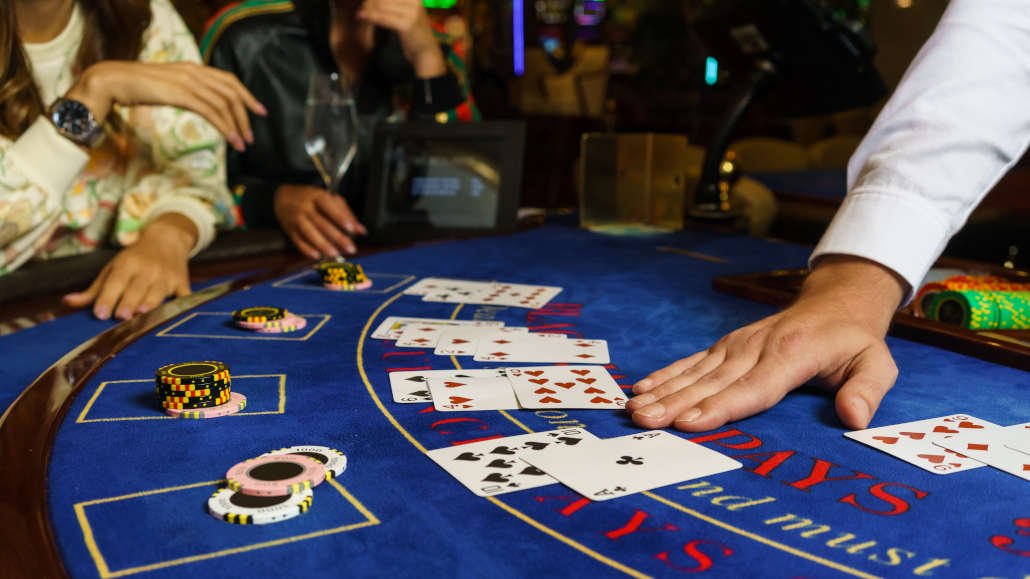
When it comes to Blackjack, most articles focus on counting cards, managing bankrolls, or memorizing basic strategy charts. Yet, professional players know that beyond numbers lies a more profound layer—the psychology of risk. Blackjack is not merely a contest of arithmetic; it’s a battlefield of emotions, perception, and human behavior. This article explores how professional players harness psychological principles and advanced decision-making tactics to gain an edge that statistics alone can’t provide.
The Mental Game Behind the Math
Blackjack’s allure lies in its delicate balance between skill and chance. Each decision—hit, stand, double down, or split—forces players to weigh probability against instinct. Professionals understand that mental stability and cognitive control are just as vital as card knowledge. They know that the brain under stress can distort probabilities, leading to impulsive errors.
Unlike casual players who act on hunches, professionals train themselves to remain psychologically neutral regardless of the outcome. Whether they win ten hands in a row or lose five, their mindset stays anchored to the long-term expectation, not short-term fluctuation.
The Role of Cognitive Biases in Blackjack
Cognitive biases subtly infiltrate even the most skilled players’ decision-making. Recognizing and neutralizing these biases separates consistent winners from emotional gamblers.
Common Biases That Affect Players
-
Gambler’s Fallacy: The mistaken belief that previous outcomes influence future ones. After losing several hands, a player might think a win is “due.”
-
Recency Bias: Overvaluing recent results instead of the full statistical picture. Losing streaks can make players alter optimal decisions.
-
Confirmation Bias: Seeking patterns that justify emotions. A player may believe “the dealer always gets 21” after a few unlucky rounds, reinforcing irrational fears.
-
Loss Aversion: The emotional pain of losing often outweighs the pleasure of winning, prompting players to deviate from correct strategy to “recover losses.”
Professional players counteract these tendencies through data-driven discipline and mental conditioning, ensuring that logic outweighs emotion in every hand.
Emotional Regulation and Decision Efficiency
Blackjack is a high-pressure environment. Whether in a tournament or a late-night session, emotional regulation becomes a defining skill. Seasoned players use methods borrowed from cognitive-behavioral therapy and mindfulness practices to sustain emotional balance.
Techniques for Mental Equilibrium
-
Breathing Control: Deep, rhythmic breathing to reset focus after large swings.
-
Anchoring Rituals: Simple repetitive actions—like stacking chips in a certain order—to regain composure between hands.
-
Visualization: Mentally simulating calm and confident play before sitting at the table.
-
Micro-Breaks: Brief mental resets after every few hands to prevent decision fatigue.
By reducing emotional noise, these techniques sharpen focus, allowing players to process probabilities with precision and avoid the subtle errors that compound over time.
Pattern Recognition and Predictive Behavior
While Blackjack is grounded in mathematics, elite players develop an almost intuitive sense of timing and rhythm at the table. This stems from their ability to recognize behavioral micro-patterns—not in the cards, but in the people.
Dealers and players often reveal subconscious habits under stress. A skilled observer may detect timing tells, betting hesitation, or even micro facial reactions when tension rises. While Blackjack isn’t a bluffing game like poker, subtle behavioral cues can still inform optimal betting adjustments.
Professionals integrate behavioral analytics into their gameplay, combining probability tracking with psychological profiling of opponents and dealers to anticipate momentum shifts in real time.
Strategic Patience: The Discipline of Delayed Gratification
Blackjack rewards patience, yet human nature craves immediacy. Professionals understand that each session is just one chapter in a long statistical narrative. Instead of chasing instant profits, they embrace variance as part of the process.
This approach requires delayed gratification, a psychological trait strongly correlated with long-term success in both finance and gaming. Rather than reacting emotionally to variance, professional players think in terms of expected value (EV) and sample size significance.
Each hand becomes data—not a judgment of luck, but a measurement of accuracy. This mental shift allows pros to sustain composure through downswings and capitalize on the inevitable upturns with clarity.
The Neuroscience of Risk Perception
The brain’s reward system, particularly the dopamine circuitry, plays a central role in how players perceive wins and losses. Winning triggers dopamine spikes, reinforcing behavior patterns that may or may not be rational.
Professional Blackjack players work to rewire this neurological feedback loop by redefining what constitutes a “reward.” For them, the real reward isn’t winning a hand—it’s making the correct decision, regardless of the outcome.
By decoupling emotion from results, they train their brains to associate satisfaction with discipline and process, not short-term gain. This neurological reframing creates the mental resilience that separates professionals from emotional gamblers.
Advanced Psychological Tactics for Edge Optimization
Elite players employ a range of psychological tactics that go far beyond conventional strategy. These techniques involve metacognition—thinking about how one thinks—and self-monitoring during play.
Key Psychological Tactics
-
Meta-Observation: Continuously observing one’s own emotional state to prevent impulsive reactions.
-
Behavioral Masking: Maintaining a neutral demeanor to avoid giving away any information to attentive dealers or pit bosses.
-
Controlled Variability: Intentionally varying bet sizes or decision timing to reduce predictability and avoid detection in advantage play.
-
Cognitive Resetting: Using deliberate pauses between hands to clear mental clutter and refocus on the next decision.
These methods blend psychology with performance science, creating an optimized mental state that supports strategic precision under pressure.
Building a Blackjack Mindset for the Long Run
Long-term success in Blackjack isn’t about mastering the deck—it’s about mastering oneself. Professionals cultivate a mindset rooted in stoicism, focus, and probabilistic thinking. They understand that luck is a short-term disruptor but skill and psychology govern outcomes over thousands of hands.
Developing this mindset involves continuous self-reflection and deliberate practice. Many players maintain game journals to track emotional states, decision patterns, and variance outcomes. This data-driven introspection reveals subtle habits that, when corrected, yield compounding improvements over time.
The professional approach to Blackjack is therefore not reactive but evolutionary—a constant refinement of both cognitive and emotional frameworks.
Conclusion
At the highest level of play, Blackjack transforms from a mathematical puzzle into a psychological art form. The cards provide structure, but the human mind dictates the outcome. Players who learn to regulate emotion, neutralize bias, and sustain focus gain an invisible yet undeniable advantage—the power of mental mastery over mathematical variance. In a game defined by probability, the sharpest edge remains psychological precision.
FAQs
1. Why do professional Blackjack players emphasize emotional control over card counting?
Because emotional volatility can undermine even the best counting systems. Consistency requires calm, not just calculation.
2. Can psychological training truly improve win rates in Blackjack?
Yes. Improved focus and bias reduction lead to more consistent adherence to optimal strategies, indirectly boosting win expectancy.
3. How does mindfulness help during long Blackjack sessions?
Mindfulness enhances attention span and prevents tilt, allowing players to sustain logical decision-making across hours of play.
4. Do professional players rely on intuition at all?
They do, but it’s trained intuition—rooted in thousands of observed patterns and experiences, not impulse.
5. What’s the biggest mental trap for experienced Blackjack players?
Overconfidence. Even seasoned pros can fall victim to believing they can outthink variance or “feel” when a win is due.
6. How do professionals handle extended losing streaks?
They reframe them as natural variance and rely on bankroll management and long-term statistics instead of emotional reaction.
7. Can these psychological principles apply outside Blackjack?
Absolutely. The skills of emotional regulation, probabilistic reasoning, and delayed gratification are universally valuable in business, investing, and life.