3
For generations, the game of bingo was strictly tethered to physical geography. Participation required transportation to a local community center or commercial hall, adherence to a rigid schedule, and the physical dexterity to manage multiple paper cards and ink markers simultaneously. While the game was inherently communal and wildly popular, its traditional format inadvertently excluded a massive demographic of potential players. Those with limited mobility, visual impairments, cognitive decline, or simply unpredictable work schedules were largely shut out of the experience.
The digital revolution did not just port bingo to the internet; it fundamentally dismantled every physical, cognitive, and logistical barrier that once surrounded the game. Through deliberate software engineering, inclusive user interface design, and mobile optimization, technology has transformed online bingo into one of the most widely accessible forms of interactive digital entertainment available today.
The Evolution from Physical Limitations to Digital Hubs
The earliest iterations of online bingo in the late 1990s and early 2000s were rudimentary, often requiring cumbersome software downloads and powerful desktop computers. While this eliminated the need for physical travel, it erected new barriers related to technical literacy and hardware costs. The true leap in accessibility occurred with the standardization of modern web technologies.
The transition to HTML5 architecture allowed developers to build games that run directly within a web browser without the need for third-party plugins. This shift democratized access instantly. Players no longer needed to understand how to download, install, or update complex client software. The game became accessible via a simple web address, lowering the technical friction to near zero and opening the digital doors to an older demographic that historically shied away from complex computer applications.
Mobile Optimization and the Power of Portability
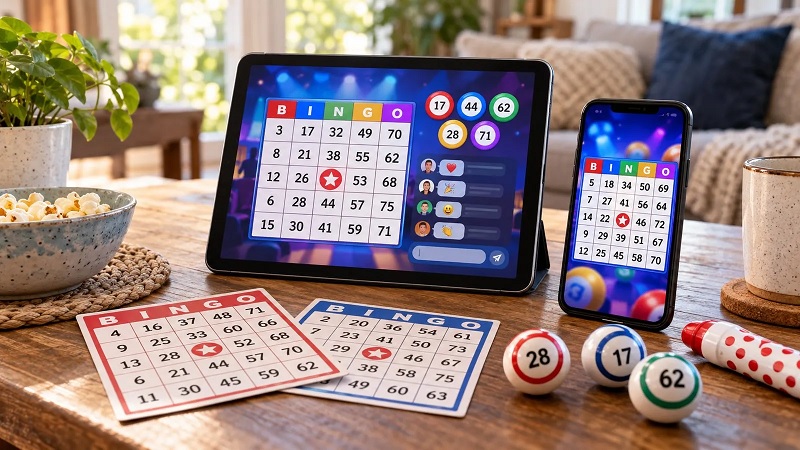
The proliferation of the smartphone is arguably the single greatest catalyst for gaming accessibility. By optimizing online bingo for mobile operating systems, developers placed the entire experience into the pockets of millions. This level of portability means that geography and physical mobility are no longer prerequisites for participation. A player recovering from surgery in a hospital bed, a commuter on a long train ride, or a housebound senior citizen can all access the exact same digital ecosystem with equal ease.
Touchscreen Interfaces and Intuitive Navigation
Mobile optimization brought with it the touchscreen interface, which provides a far more intuitive user experience than the traditional mouse and keyboard. For elderly players or individuals dealing with arthritis and fine motor skill degradation, manipulating a computer mouse to click small digital targets can be a painful and frustrating endeavor. Touchscreens mimic the natural human instinct to point and touch. By utilizing large, high-contrast buttons and gesture-based navigation, mobile bingo platforms have engineered an environment where physical limitations do not impede the ability to play and interact.
Inclusive Design: Bridging the Gap for Players with Disabilities
True accessibility extends far beyond mere convenience; it requires intentional, inclusive design that accounts for a wide spectrum of human capabilities. Modern online bingo operators have increasingly adopted Web Content Accessibility Guidelines to ensure their platforms are usable by individuals with varying degrees of visual, auditory, and cognitive impairments.
Visual and Auditory Enhancements
For players with visual impairments, a traditional paper bingo card filled with small, densely packed numbers is a structural impossibility. Digital platforms solve this through highly customizable user interfaces. Players can seamlessly scale the size of their digital cards, increase the numerical font size, and switch to high-contrast color palettes that help numbers stand out against the background. Furthermore, modern platforms are built to be compatible with standard screen reading software, allowing completely blind users to navigate lobbies, make deposits, and select gaming rooms.
Auditory accessibility has also seen massive improvements. While the traditional bingo caller relies on a loudspeaker that can be difficult for the hard of hearing to decipher, digital platforms offer dual-channel feedback. Every number called is prominently displayed on the screen with accompanying visual animations, ensuring that deaf or hard-of-hearing players never miss a beat. Conversely, for those who rely on audio cues, the voice callers can be volume-adjusted independently from the background music and sound effects, providing a customized auditory environment tailored to the user’s specific hearing needs.
Auto-Daubing and Cognitive Load Reduction
Perhaps the most revolutionary accessibility feature unique to online bingo is the introduction of auto-daubing technology. In a physical hall, tracking multiple cards requires intense focus, rapid eye-hand coordination, and sustained cognitive stamina. If a player looks away for a moment, they risk missing a number and losing the game. This creates a highly stressful environment for individuals with slower reaction times, cognitive processing challenges, or attention deficit disorders.
Auto-daubing completely abstracts this cognitive load. When enabled, the software’s algorithm automatically marks the called numbers across all of a player’s active cards simultaneously. The system will even automatically call “Bingo” when a winning pattern is achieved. This technology shifts the nature of the game from a high-stress test of reflexes to a relaxed, engaging form of entertainment. Players can purchase dozens of cards without feeling overwhelmed, allowing them to focus entirely on the social aspects of the chat room rather than frantically scanning for numbers.
Financial Accessibility: Democratizing the Buy-In
Accessibility is not solely a matter of physical or cognitive capability; it is also deeply tied to economics. Attending a physical bingo hall is an expensive endeavor. It involves transportation costs, the expectation of purchasing food or beverages, and mandatory minimum buy-ins that price out casual players.
The digital infrastructure of online bingo has fundamentally altered the financial mechanics of the game. Because digital operators have vastly lower overhead costs than brick-and-mortar halls, they can offer ticket prices for mere pennies. This micro-transaction model allows players with strict budgets or fixed incomes to enjoy hours of entertainment without risking significant capital. Furthermore, the integration of diverse payment gateways—ranging from traditional debit cards to digital e-wallets and even cryptocurrencies—ensures that players without access to conventional banking infrastructure can still easily fund their accounts and participate in the digital economy.
The Social Architecture of Modern Platforms
One of the most vital functions of traditional bingo was its role as a community gathering space, particularly for older adults who might otherwise face severe social isolation. Early critics of online gaming feared that digitizing bingo would strip away this essential human connection. Instead, technology has amplified it, creating accessible social architectures that span the globe.
Chat Moderation and Automated Translation
Modern online bingo platforms feature sophisticated, integrated chat rooms running parallel to the gameplay. Because the auto-daubing feature handles the mechanical aspect of the game, players are free to converse in real-time. These digital spaces are overseen by live chat moderators who keep the environment safe, welcoming, and toxic-free, which is crucial for vulnerable demographics.
Advanced platforms have also begun integrating real-time translation application programming interfaces into their chat software. This allows a player in the United Kingdom to type a message in English, while a player in Spain reads the exact same message translated instantly into Spanish. By breaking down linguistic barriers, technology has created a universally accessible social environment where friendships are formed based on shared interests rather than geographic or linguistic proximity.
The Future of Accessible Gaming: Voice Command and AI
As technology continues to accelerate, the accessibility of online bingo is poised for another massive leap forward through the integration of artificial intelligence and voice recognition technology. Smart speakers and virtual assistants are already ubiquitous in modern homes, and developers are actively building bingo clients that operate entirely on voice commands.
In the near future, a visually impaired player or an individual with severe motor skill limitations will simply be able to speak to their device, instructing it to purchase tickets for the next round, adjust their wager, and initiate gameplay. AI-driven personalization will also allow platforms to automatically adjust the user interface based on a player’s historical behavior, instinctively enlarging text or slowing down the speed of the number calls if the system detects that the user is struggling to keep pace.
The narrative of online bingo is a masterclass in how purposeful technological implementation can reshape an industry. By continuously refining the digital infrastructure to accommodate the broadest possible spectrum of human abilities, developers have done far more than just modernize a classic game. They have engineered a highly inclusive digital sanctuary that provides entertainment, community, and connection to millions of people who were previously left out of the game.